Job mobility in Australia just hit a near record low: what it means for you
ABS data shows job mobility fell to 7.2% in the year to February 2026. Here is what that means if you're one of the few people actually applying.
- Australia
- Job search
- Career strategy
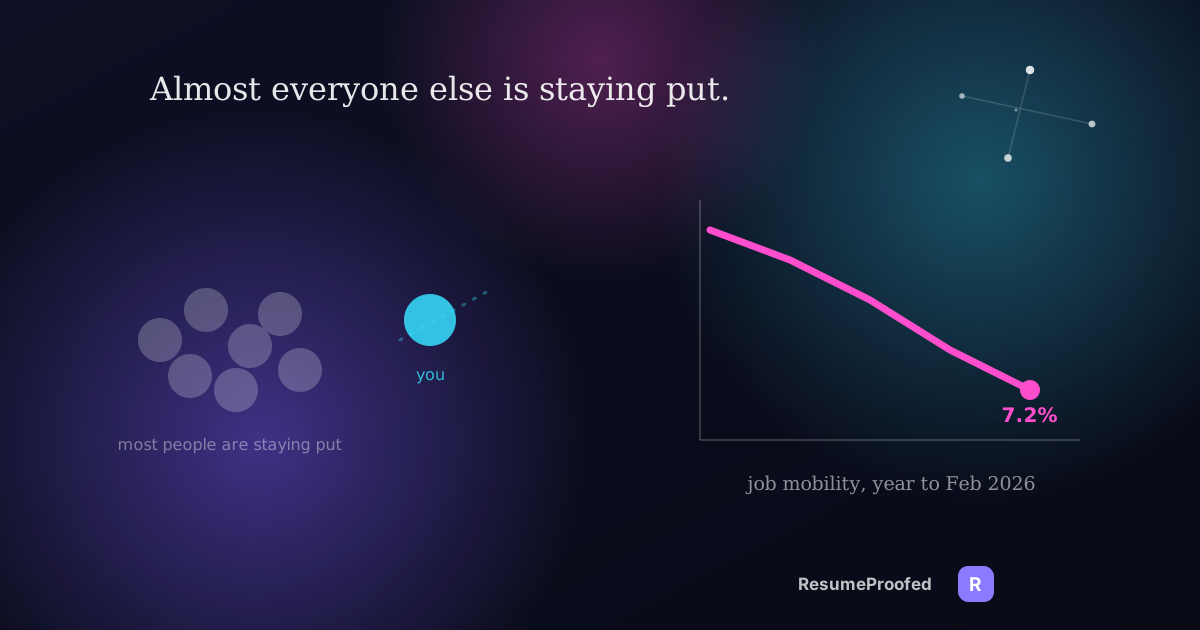
If you're actively applying for a new role right now, official data says you're doing something most Australians currently aren't: voluntarily leaving a job. That's worth knowing before you second-guess whether now is a strange or risky time to be moving, because the honest answer, according to the numbers, is that you're the exception rather than the norm.
The position worth stating first: fewer people changing jobs cuts both ways for you. It likely means less active competition among genuinely engaged applicants at any given moment, but it also means your own decision to move reads as more deliberate and more noticeable to a hiring manager than it would have a few years ago, which makes how you explain that decision matter more than it used to, not less.
The numbers: job mobility at a near record low
The Australian Bureau of Statistics' release on 31 July 2026 found Australia's job mobility rate fell to 7.2 percent in the year to February 2026, down from 7.7 percent the year before. In practical terms, just over 1.0 million employed Australians changed employer or business over that period, continuing what the ABS describes as a long-term downward trend in job mobility going back to the 1970s. The decline isn't evenly spread across age groups either: mobility ranges from 12.0 percent among 15 to 24 year olds down to just 1.2 percent among those 65 and over, so younger workers remain considerably more likely to move than older ones, even as the overall national rate keeps drifting lower.
HR industry coverage of the same release frames this as continuing a "job hugging" trend, employees staying in their current roles through a period of economic uncertainty rather than testing the market, even when they might otherwise consider a move. The same coverage notes a retrenchment rate of just 1.8 percent, which points toward relative job security for people who do stay, rather than people being pushed out and forced back into the market involuntarily.
Why fewer people moving cuts both ways for your search
It's tempting to read a declining mobility rate as pure bad news, evidence that the job market is simply harder than it used to be. That's an incomplete read. A lower mobility rate mostly describes what other employed people are choosing to do, not what's structurally possible for you specifically. Fewer voluntary movers at any given moment plausibly means less competition among people who are actively, seriously job hunting right now, since a large share of the workforce has, in effect, opted out of the search entirely for the time being.
But the same trend changes how a hiring manager is likely to read your own move. When voluntary job changes were common and frequent, a resignation or a short stint barely needed explaining, it read as routine churn. In a climate where most people are staying put, a hiring manager who reviews far fewer voluntary movers than they did a few years ago is more likely to notice, and ask about, why you're one of the people who did move. That's not necessarily a negative scrutiny, but it is closer scrutiny, and it means the story behind your move is doing more work in an interview or a cover letter than it would have in a higher-mobility market. This connects directly to the record applicant volumes covered in this site's piece on applications per job ad hitting a record high in Australia: more people competing for each individual ad and fewer people voluntarily changing jobs overall aren't contradictory, they describe different slices of the same cooling, more cautious labour market from two separate angles.
How to frame a voluntary move in this specific climate
Name the specific gap the new role fills, not a vague desire for change
The strongest framing for a voluntary move right now is a specific, concrete reason tied to the role itself: a skills gap you want to close, a scope of responsibility your current role doesn't offer, or a specific type of work you want more of. "I wanted a new challenge" reads as vague in any market, but it reads as particularly thin in a climate where most people are choosing to stay put despite similar restlessness, because it invites the obvious follow-up question of why now, specifically, rather than earlier or later.
If you have several short stints, address the pattern directly rather than hoping it goes unnoticed
A few short roles that might have read as unremarkable churn in a higher-mobility market are more likely to draw a direct question now, precisely because voluntary movement itself is less common. Rather than leaving the pattern to speak for itself, a brief, honest line in a cover letter or an early interview answer, tying the moves to a specific, coherent thread, a skill you were deliberately building, an industry you were narrowing into, gives the hiring manager the context they're now more likely to actively look for. Our guide on explaining a career gap on your resume covers a closely related situation, framing a period that needs context rather than one you can assume speaks for itself.
Use the data itself as part of your framing, where it's genuinely relevant
If you're moving toward a growing niche or a role with a specific skills shortage, it can be worth naming that directly: "I'm moving toward data centre operations because that's where I see the strongest medium-term demand in this sector" is a stronger, more current-sounding rationale than a generic one, and it signals you're making a researched decision rather than reacting to short-term restlessness. If your resume and interview answers aren't converting despite this kind of clear framing, the diagnostic checklist in this site's piece on why you're not getting interviews covers the other, more common factors worth ruling out.
A worked example
Say you've held three roles in five years, each a step up in responsibility within marketing analytics, and you're applying for a senior analytics role after 14 months in your current position, a tenure that might read as short in isolation. Instead of leaving the pattern unaddressed, your cover letter states plainly: "Each move I've made has been toward greater ownership of analytics strategy rather than execution alone, and this role is the next deliberate step in that specific direction, not a reaction to my current position." That single framing does two things a hiring manager reading fewer voluntary moves than they used to is now more likely to actively want: it gives your history a coherent thread, and it answers the "why now" question before it has to be asked, rather than leaving a pattern of short stints to be read as restlessness by default.
Common questions
What is Australia's current job mobility rate?
The Australian Bureau of Statistics reported a job mobility rate of 7.2 percent in the year to February 2026, down from 7.7 percent the year before, continuing a long-term decline. Just over 1.0 million employed Australians changed employer or business over that period.
What does "job hugging" mean?
It's a term used to describe employees staying in their current roles rather than testing the job market, typically attributed to economic uncertainty and a more competitive hiring environment. Industry coverage of the ABS's 2026 job mobility data describes it as an ongoing, continuing trend.
Is it a bad time to change jobs in Australia right now?
The data doesn't clearly support that. Fewer people voluntarily moving may mean less active competition among genuinely engaged applicants at any given time, though it also means your own move is likely to draw closer scrutiny and more direct questions about your reasons than it would have in a higher-mobility market.
Why are fewer people changing jobs in Australia?
Industry coverage of the ABS's July 2026 release attributes the trend to economic uncertainty and a more cautious approach to job security, with employees choosing to stay in current roles rather than test an uncertain market. The ABS retrenchment rate of 1.8 percent points toward relative job security for people who stay.
How do I explain a short job tenure if job mobility is low right now?
Give it a specific, coherent thread rather than leaving the pattern unaddressed: name the skill, scope, or direction each move was building toward. In a climate where voluntary moves are less common, a hiring manager is more likely to ask about a pattern of short stints directly, so addressing it upfront works in your favour.
Are younger or older workers more likely to change jobs in Australia?
Younger workers move far more often. ABS data shows mobility ranges from 12.0 percent among 15 to 24 year olds down to just 1.2 percent among those aged 65 and over, a wide gap that has remained consistent even as the overall national rate has continued to decline.
Where ResumeProofed fits, and where it doesn't
ResumeProofed can't tell you whether now is the right personal moment to change jobs, and no honest tool can make that call for you. What it can do is help you build a resume and application that frames your specific move clearly and matches the language of the role you're moving toward, which matters more, not less, in a climate where hiring managers are reading fewer voluntary career moves and paying closer attention to the ones they do see.
Try ResumeProofed free: two tailored applications on the house, no card required.